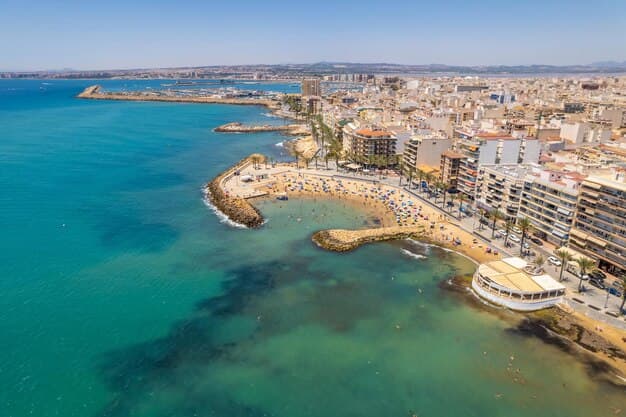
More and more northern Europeans are discovering the Costa Blanca as a place to spend the winter. And no wonder: a mild winter, 300 sunny days a year, affordable groceries and a lively social life. But how do you plan a winter stay like this? What does it cost, what can you do and where is the best place to stay?
In this article we cover it all. We share our own experience and that of guests who come back to us season after season.
Why the Costa Blanca?
Spain is nothing new for winter sun seekers. But the Costa Blanca has a number of qualities that set it apart from the Canary Islands or the Costa del Sol.
First, the climate. On average, the province of Alicante has the most hours of sunshine on the European mainland. In winter, daytime temperatures regularly reach 18 to 22 degrees. It can rain, but rainy spells are short and alternate with beautiful, clear days.
Second, accessibility. Alicante airport has direct flights from all over Europe, all year round. The drive from the airport to Torrevieja takes thirty minutes; to Calpe just under an hour and a half.
And third, liveability. The Costa Blanca is not just a tourist area. There are real towns, real supermarkets, real hospitals. You can live here comfortably, not just stay.
Climate by month
October
Warm, quiet, lots of sun. The summer crowds are gone and prices are lower. One of the loveliest months.
November
Occasional rain, but plenty of sunny days too. Ideal for walking. Most restaurants and shops are open.
December
Milder than northern Europe. A festive atmosphere in the villages. Calm and relaxed. Bring a jumper for the evenings.
January
The coldest month, but still more pleasant than a northern European winter. Lunch on a terrace during the day is entirely possible.
February
Almond blossom makes the region beautiful. You can already feel spring in the air. Perfect walking weather.
March
Spring is in full bloom. Warmer than back home and lovely to be outdoors. The Fallas festival in Valencia is an absolute must.
Average values based on historical climate data for the province of Alicante.
What can you do in winter?
The big misconception about wintering: "There is nothing to do." In reality, the Costa Blanca is often more pleasant in winter than in summer. Fewer crowds, lower prices and activities that are impossible in the July heat.
Walking
The Costa Blanca has an excellent network of trails. From coastal paths along the Mediterranean to mountain hikes in the Sierra Bernia. In winter you walk in pleasant temperatures without the heat of summer.
Golf
The region has dozens of top-quality golf courses. Outside the high season green fees are lower and courses are quieter. Golfers who would never pick up a club in summer can make up for lost time here.
Cycling
Via Verde greenways and quiet inland roads make the Costa Blanca a paradise for cyclists. The terrain is challenging, the roads are good and traffic is minimal out of season.
Cultural day trips
Alicante, Murcia, Valencia and beautiful inland villages such as Guadalest and Polop are perfect for day trips. Fewer crowds, easier parking, more atmosphere.
Markets and fiestas
Out of season, the weekly markets are authentically Spanish. And the local winter festivals, from Christmas to the Fallas in March, offer a unique insight into Spanish culture.
What does a winter stay cost?
The cost of wintering falls into three categories: accommodation, living costs and travel.
Accommodation: Outside the high season (October to April) rents are considerably lower than in summer. An apartment for two in Torrevieja or Calpe costs around 900 to 1,500 euros a month in winter, depending on size and location. For stays of several months, the price is always open to discussion.
Living costs: Groceries in Spain are cheaper than in much of northern Europe. Fresh vegetables, fruit, fish and meat are excellent quality and affordable. If you eat out regularly, you will find good restaurants in Torrevieja for 12 to 20 euros per person for a three-course menu including wine.
Travel: Low-cost airlines such as Ryanair, easyJet and Vueling fly to Alicante from across Europe, often for 30 to 90 euros one way. Outside the school holidays, fares are very reasonable.
Calpe or Torrevieja for a winter stay?
For a shorter winter stay of two to four weeks, Calpe is an excellent choice. Active, varied and with stunning scenery.
For longer stays of a month or more, the balance tips towards Torrevieja. The town is larger, has more everyday facilities, a large international social network and an overall atmosphere geared to long-term residents.
Our apartments Costa Azul and Palmeras Puerto in Torrevieja are specifically furnished for longer stays: fully equipped, centrally located and with no surcharges for long stays.
Practical: what do you need?
- + Health cover abroad (EHIC or GHIC card, plus travel insurance; check how long your policy covers you outside your home country)
- + An NIE number if you stay longer or want to buy a car (apply via the Spanish consulate in your home country or locally)
- + EU and UK driving licences are valid in Spain
- + Non-EU citizens, including UK nationals, can stay up to 90 days in any 180-day period without a visa
- + Spain has an excellent 4G/5G network; a local SIM card is cheap and handy